
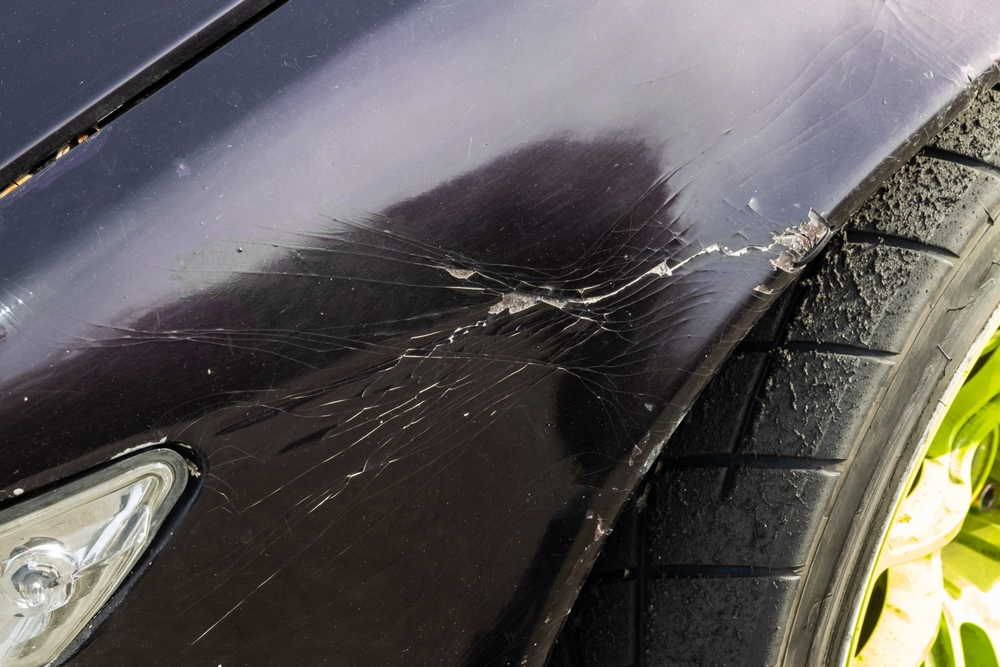
A panel comes out of the booth looking almost perfect, then you spot small craters, pin-sized blisters, or circular voids that expose the coat underneath. These are not random bad luck. Fisheyes, solvent pop, and cratering each leave a signature that tells you exactly what went wrong upstream. Learning to read that signature is the fastest way to stop wasting a day on rework. At Legacy Coatings, the technical team fields these questions constantly, so here is a practical field guide to diagnosing contamination defects before they drag you into a second respray.
Fisheyes: The Silicone Fingerprint
A fisheye is a small circular crater where the fresh coating pulls away from a contaminated spot, usually exposing the layer beneath. The cause is almost always a surface energy conflict: silicone, wax, oil, or body-shop grease sitting on the substrate repels the wet film.
The usual sources are tire dressings and lubricants carried on air lines, hands, or shop rags, and silicone-based cleaners used near the booth. Because silicone travels on airborne overspray and compressed air, a contaminated gun or moisture trap can seed fisheyes across an entire job.
How to prevent fisheyes
- Wash and then solvent-wipe every panel with a fresh cloth before and after sanding, working wet-on-wet so contaminants are lifted rather than smeared.
- Drain air traps daily and confirm your air supply is clean and dry.
- Keep silicone tire and trim dressings out of the prep and mixing areas entirely.
If a fisheye appears mid-coat, let the film flash, sand smooth, and re-apply. A fisheye eliminator additive can help in a pinch, but fixing the contamination source is the real cure.
Solvent Pop: Trapped Vapour Looking for a Way Out
Solvent pop looks like tiny burst bubbles or pinholes in the surface. It happens when the top of the film skins over before the solvent underneath can escape. The vapour pushes through and leaves a crater behind.
The drivers are almost always process-related: film built too heavy, flash time cut short between coats, a reducer that is too fast for booth conditions, or forcing heat before the solvent has gassed off. Heat and humidity make it worse, which is why pop often spikes during a busy summer schedule.
How to prevent solvent pop
- Match reducer and hardener speed to your actual booth temperature, not the calendar.
- Respect flash times between coats and avoid stacking heavy wet layers.
- Do not trigger bake heat until the final coat has flashed.
Choosing the correct reducer for the day is a product decision as much as a technique one. If you are unsure which temperature range fits your booth, the crew behind the automotive refinish products at Legacy Coatings can walk you through matching activators and reducers to your conditions.
Cratering: Broader Craters, Different Causes
Cratering resembles fisheyes but the craters are often larger and less uniform. The culprit is frequently contamination within the coating system itself, or incompatibility between products from different lines, rather than a spot on the panel.
Mixing incompatible primers, clears, and additives, or using a dirty mixing stick or cup, can introduce the conflict. This is one more reason a single, documented refinish line reduces headaches: every component is formulated to work together.
How to prevent cratering
- Keep mixing tools, cups, and stir sticks clean and dedicated.
- Store products sealed and avoid cross-contaminating lids.
- Stay within one compatible system of primer, sealer, base, and clear.
Build a Clean-Air and Clean-Surface Discipline
Most contamination defects trace back to two things: dirty air and dirty surfaces. A shop that invests in moisture management, disciplined wipe-down steps, and consistent products sees defects fall sharply. Pairing the right full refinish product line with repeatable habits is what keeps panels coming out of the booth the first time. Teams that want structured coaching on wipe-down, mixing discipline, and defect correction can book hands-on application training rather than learning the hard way on customer vehicles.
Frequently Asked Questions
What is the fastest way to tell a fisheye from solvent pop?
Look at the shape and timing. Fisheyes appear almost immediately as the wet film pulls away from a spot, leaving a clean circular crater. Solvent pop shows up as the film sets and looks like tiny burst bubbles. Fisheyes point to surface contamination; pop points to trapped solvent and process.
Can I just buff these defects out?
Sometimes light surface imperfections polish out, but true fisheyes, pop, and cratering usually extend into the film. The reliable fix is to let the coat cure, sand the affected area, and recoat after correcting the root cause.
Does humidity really change my results that much?
Yes. High heat and humidity speed skinning and slow solvent release, which raises the risk of solvent pop. Matching reducer speed to actual booth conditions is one of the most effective controls you have.
How do I keep silicone out of my booth?
Ban silicone tire and trim dressings from the prep area, use dedicated wipe cloths, and drain and maintain your air traps daily. Silicone travels easily on overspray and compressed air, so containment is everything.
Who can help me match reducers to my shop conditions?
A knowledgeable supplier can map activators, reducers, and clears to your temperature and humidity range. Legacy Coatings supports collision shops across Western Canada with exactly that kind of product guidance.