
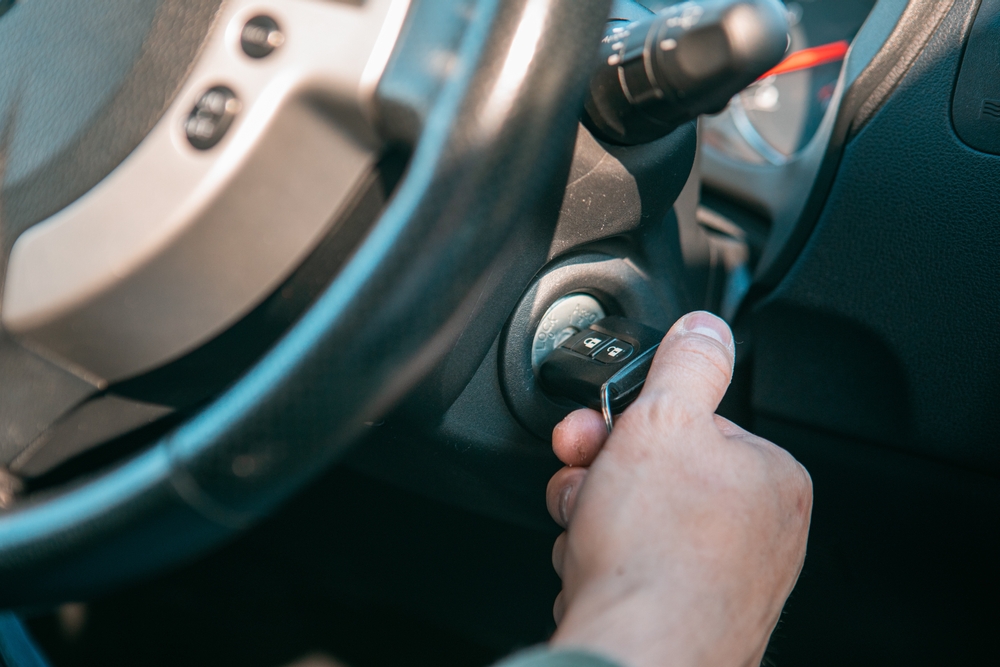
You slide the key into the ignition, go to start the car, and nothing moves. The key won’t rotate, the dash stays dark, and you are already late. Before you force it or assume the worst, it helps to know what is actually jammed. A key that refuses to turn almost always points to one of three culprits: the steering lock, the ignition cylinder, or the key itself. At Your Key Maker Automotive Locksmith we see all three on Ottawa driveways every week, and the fix is very different depending on which one it is.
The Steering Wheel Lock: The Easiest Cause to Rule Out
Most vehicles engage a steering lock whenever the key is removed and the wheel is turned even slightly. If you parked on a slope or nudged the wheel while getting out, the lock pin can bind against the column and hold the cylinder in place. The tell-tale sign is a wheel that will not move more than a centimetre in either direction.
What to try first
Grip the wheel and rock it gently left and right while applying light, steady turning pressure on the key. Do not crank the key hard, that is how keys snap. If the wheel frees up and the key turns, you were never looking at a real fault. If the wheel is loose but the key still will not turn, the problem is deeper.
The Ignition Cylinder: Worn, Dirty, or Failing
The ignition cylinder is the mechanical lock the key rotates inside. Over years of daily use, its internal wafers wear down, debris and pocket lint pack into the keyway, and the return spring weakens. In an Ottawa winter, moisture that worked its way inside can freeze and seize the mechanism overnight.
Signs the cylinder is the problem
- The key goes in but turns roughly or only part way.
- A spare key behaves exactly the same as your daily key.
- The fault comes and goes, often worse first thing in the morning.
When a cylinder is worn or seized, no amount of jiggling fixes it reliably. It needs cleaning, rebuilding, or replacement, work that falls under ignition repair in Ottawa. A trained locksmith can often rebuild the cylinder to match your existing key so you are not juggling two different keys afterward.
The Key Itself: Bent, Worn, or Breaking Down
Keys are consumables. The cuts that let the wafers line up wear flatter with every turn, and a key that has been dropped, sat on, or used as a makeshift tool can bend just enough to stop engaging. A worn key is also the leading cause of a snapped key, because drivers instinctively push harder when it resists.
How to check your key
Compare your daily key to a spare that rarely gets used. If the spare turns smoothly and the daily key does not, the key is worn, not the car. In that case a fresh, accurately cut car key replacement solves the problem and protects the cylinder from further damage. If the daily key feels loose, cracked, or already has a hairline split, stop using it, because a break inside the cylinder turns a simple job into a broken key extraction.
Why Forcing It Is the Worst Move
Every extra pound of pressure you put on a stubborn key loads the thin metal blade and the delicate wafers inside the cylinder. Force often does one of two things: it snaps the key off flush with the lock, or it damages the cylinder so badly that it must be replaced rather than repaired. What might have been a quick on-site cleaning becomes a full rebuild. The smarter move is to stop, diagnose, and call a professional who can tell the difference without guessing.
How a Mobile Locksmith Diagnoses It On-Site
Because the three causes look almost identical from the driver’s seat, an experienced technician works through them in order. They confirm whether the steering lock is binding, test a freshly cut key against the cylinder, and inspect the keyway for wear and debris. Only then do they decide whether the job is a quick adjustment, a new key, or a cylinder repair. Your Key Maker Automotive Locksmith handles this diagnosis at your location across Ottawa, so a car that will not start does not have to be towed before anyone has even looked at it.
Frequently Asked Questions
Why does my key turn fine some days and not others?
Intermittent faults usually mean a worn cylinder or a key near the end of its life, and cold or damp conditions make both worse. If the trouble clusters around cold mornings, moisture in the cylinder is a strong suspect and the mechanism should be inspected before it seizes completely.
Can spraying lubricant in the ignition fix it?
Household oils and sprays attract dust and can gum up the wafers, making the problem worse over time. A locksmith uses the correct dry lubricant and will clean the keyway properly rather than masking a mechanical fault.
Should I replace the key or repair the ignition?
It depends entirely on which part has failed, so no honest answer exists before an inspection. A technician will assess the cylinder and key on-site and give you a clear quote once the actual cause is known.
My steering wheel is locked and the key won’t move at all. Is that serious?
Often not. Rock the wheel side to side while turning the key gently, and the lock pin usually releases. If the wheel is free but the key still will not turn, the cylinder or key is the issue and needs a closer look.
Can you make a new key if the old one no longer turns?
Yes. A locksmith can cut a fresh key to your vehicle’s code and program it if required, which restores smooth operation and spares the cylinder from a worn blade. If the cylinder itself is damaged, it can be rebuilt or replaced at the same visit.