
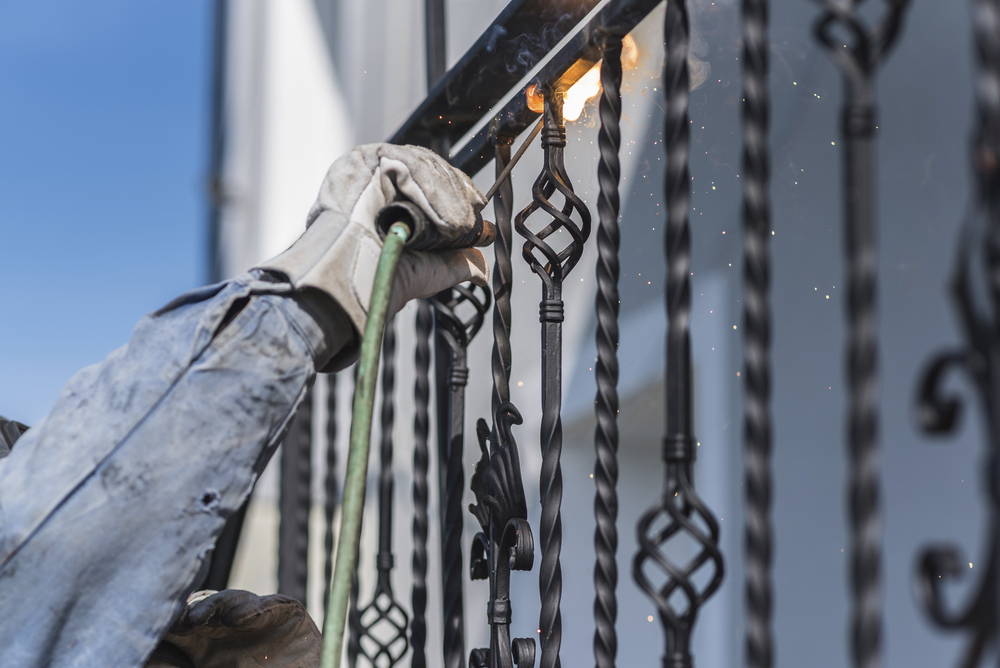
When an iron railing cracks at a joint or a fence picket breaks away from its rail, the repair comes down to welding. What many property owners do not realize is that there is more than one way to weld, and the method chosen has a real effect on how the finished repair looks and lasts, especially on ornamental ironwork where appearance is half the point. Two processes dominate this kind of work: TIG and MIG. Understanding the difference helps you know what you are paying for and why a quality repair is worth doing properly. Both methods are part of the toolkit at Metalex Inc., and the right one depends on the job in front of the welder.
The Two Processes in Plain Terms
Both TIG and MIG join metal by melting it with an electric arc and adding filler material, but they do it differently.
MIG welding feeds a continuous wire electrode through a handheld gun. The wire doubles as the filler, melting into the joint as the welder moves along it. It is relatively fast, forgiving, and well suited to laying down a lot of weld quickly. That speed makes it the workhorse for structural joints and larger repairs.
TIG welding uses a non-consumable tungsten electrode to create the arc, while the welder adds filler separately by hand. It is slower and demands more skill, but it gives precise control over heat and the size of the weld pool. That control is what makes TIG the choice for delicate, visible work.
Why the Choice Matters on Ornamental Iron
On a hidden structural bracket, speed and strength matter most, and MIG often wins. On the exposed scrollwork of a decorative railing or gate, the weld itself is part of what you see, and this is where TIG earns its reputation.
Appearance and Finish
A TIG weld can be laid down cleanly, with a small, controlled bead that blends into the surrounding metal and takes finishing well. On ornamental iron, that matters because the goal is a repair you cannot spot once the piece is recoated. A rougher, bulkier weld stands out and spoils the lines of a decorative piece no matter how strong it is.
Heat Control and Thin Metal
Ornamental iron often includes thin or delicate sections. TIG’s fine heat control reduces the risk of warping or burning through thin material, which protects the original detailing. For heavier structural members, the higher heat input of MIG is an advantage rather than a liability.
Strength Where It Counts
Both processes produce strong welds when done correctly. The decision is rarely about one being stronger in absolute terms; it is about matching the process to the joint. A good welder reads the repair, the metal thickness, and whether the joint will be seen, then chooses accordingly, sometimes using both on a single project.
Why On-Site Repair Changes the Equation
Ornamental iron railings and fences are heavy and awkward to move, and removing a built-in railing to take it to a shop is disruptive and often unnecessary. On-site mobile welding brings the equipment to the property, so a cracked iron fence joint or a damaged railing can be repaired in place. Metalex Inc. provides on-site and portable welding, including a welding truck and portable shop setup, and handles ornamental iron railings in need of restoration as well as structural iron railings requiring repairs. Having both TIG and MIG capability on the truck means the welder is not forced to compromise the method because of where the work is happening.
What a Quality Repair Looks Like
A well-executed iron repair does three things: it restores structural integrity, it disappears visually once finished, and it is protected against future corrosion. That last step is important. A fresh weld exposes bare metal, which must be cleaned and recoated so it does not become the first place rust appears. A repair that is strong but left unprotected simply fails again from a different direction. Matching the weld to the job, finishing it cleanly, and resealing the metal is the full picture of doing it right.
Deciding on Your Repair
As a homeowner, you do not need to specify TIG or MIG yourself. What helps is knowing the questions to ask: will the repair be visible, is the metal thin and detailed or heavy and structural, and how will the finish be restored afterward. A welder who can explain why they are choosing a method for your particular railing or gate is one who is matching the work to the piece rather than using whatever is fastest. Metalex Inc. assesses each repair and provides a quote once the damage has been evaluated.
Frequently Asked Questions
Is TIG or MIG better for iron railing repairs?
Neither is universally better. TIG gives finer control and cleaner, less visible welds, which suits delicate ornamental work, while MIG is faster and well suited to heavier structural joints. The best choice depends on the specific repair.
Will the repaired weld be visible?
On ornamental iron, a skilled TIG repair can be blended and recoated so it is very difficult to spot. Matching the method to a visible joint is exactly why process choice matters on decorative pieces.
Can iron railings and fences be welded on-site?
Yes. On-site mobile welding brings the equipment to your property, so heavy or built-in ironwork does not have to be removed and transported. Metalex Inc. offers portable, on-site welding for railings, gates, fences, and stairs.
What happens to the metal after welding?
A fresh weld leaves bare metal that must be cleaned and recoated to prevent rust from starting at the repair. Finishing and resealing are part of a proper repair, not optional extras.
How do I get a damaged railing or gate assessed?
Contact Metalex Inc. for an on-site evaluation. The repair is assessed in place and a quote is provided once the damage has been reviewed.