
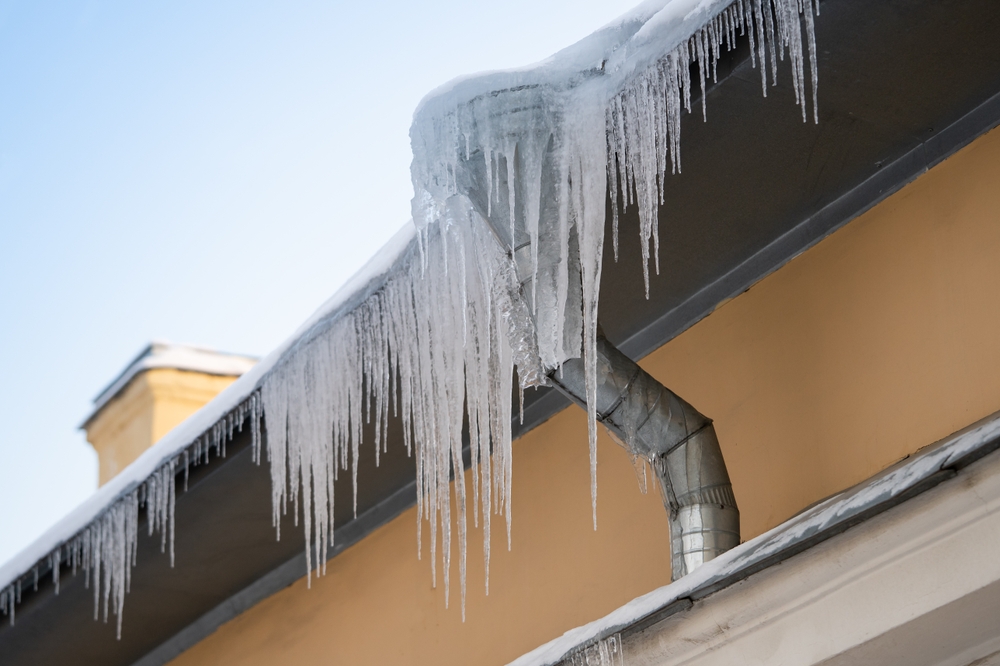
Those thick ridges of ice along a roof edge and the icicles hanging from the gutters look like a normal part of a Calgary winter. They aren’t harmless. Ice dams are one of the most damaging and most preventable winter roof problems homeowners face, and by the time water is staining a ceiling, the real issue has usually been building for weeks. Understanding why ice dams form makes them far easier to prevent.
What an Ice Dam Actually Is
An ice dam is a ridge of ice that forms at the edge of a roof and stops melting snow from draining off. Water pools behind the dam, and because standing water finds its way under shingles, it eventually works into the roof deck, the insulation, and the ceiling below.
The trigger is uneven roof temperature. Snow higher up on the roof melts, the meltwater runs down toward the cold eave, and there it refreezes. Repeat that cycle through a Calgary cold snap and the dam grows thicker each day.
Why Calgary’s climate makes it worse
Calgary’s winter swings are ideal ice-dam weather. A sunny afternoon or a chinook warms the roof enough to melt snow, then overnight temperatures plunge and refreeze it. That melt-freeze whiplash, repeated all season, is exactly the pattern that builds dams fastest.
The Real Cause Is Inside the House
It’s tempting to blame the roof, but most ice dams start in the attic. The culprit is heat escaping from the living space into the attic, which warms the underside of the roof deck unevenly.
Three things drive that heat loss:
- Insufficient attic insulation, letting warm household air reach the roof deck.
- Air leaks around light fixtures, bathroom fans, and the attic hatch that carry warm, moist air upward.
- Poor attic ventilation, which fails to flush that warm air out and keep the deck cold.
When the attic stays cold and evenly so, snow on the roof melts slowly from sun and air temperature alone, and the water drains before it can refreeze at the edge. That’s the whole goal of prevention: a uniformly cold roof.
How to Prevent Ice Dams
Air sealing and insulation first
The most effective and permanent fixes happen inside. Sealing air leaks between the living space and the attic stops the warm, moist air that drives melting, and topping up insulation to a healthy depth keeps household heat where it belongs. Many Calgary homes, especially older ones, simply don’t have enough attic insulation by modern standards. Upgrading it is work our interior renovation team handles as part of improving a home’s winter performance, and it pays off in comfort and energy use year-round, not just during snow season.
Ventilation that keeps the deck cold
A balanced intake-and-exhaust ventilation system, soffit vents drawing cool air in and ridge or roof vents letting it out, keeps the underside of the roof deck close to outdoor temperature. That even cold surface is what stops the melt-refreeze cycle at the source.
Roof-level protection
When a roof is being replaced or repaired, an ice-and-water membrane along the eaves adds a waterproof layer exactly where dams form, so any water that does back up can’t reach the deck. Proper flashing and well-maintained gutters round out the defense. If your roof is already showing wear, a professional assessment through our roofing services can identify whether the underlayment and edge detailing are up to the task before the next storm.
What Not to Do
Chipping ice off the roof with a hammer or an axe almost always damages shingles and can injure you. Salt in a sock or random heat cables are stopgaps at best and can cause their own problems. If a dam has already formed and water is getting in, the safest move is professional steam removal, which melts the ice without harming the roof, followed by addressing the attic conditions that caused it.
Frequently Asked Questions
Are ice dams covered by home insurance in Calgary?
Sudden interior water damage from an ice dam is often covered, but the gradual deterioration behind it may not be. Policies vary, so confirm the specifics with your provider and document any damage promptly.
Do icicles always mean I have an ice dam?
Not always, but heavy icicles along the eaves are a strong warning sign that meltwater is refreezing at the roof edge. It’s worth investigating attic insulation and ventilation before the problem grows.
Will adding attic insulation alone stop ice dams?
Insulation helps a great deal, but it works best paired with air sealing and proper ventilation. All three together keep the roof deck uniformly cold, which is what actually prevents dams.
Can ice dams damage my roof even without a leak inside?
Yes. Standing water can work under shingles and degrade the roof deck and fascia over time, so damage can accumulate before any interior sign appears.
When is the best time to address ice dam risk?
Early fall, before snow arrives, is ideal for inspecting insulation, ventilation, and roof edge protection. Envirotech Renovation recommends tackling these in the off-season so the home is ready before the first hard freeze.